 By 中华通讯社记者荣、方正宏
 从小说到AI动画:Sisi Tesser亮相多伦多电影节周 AI & Film Forum
探讨人类创作、AI电影与原创IP的未来

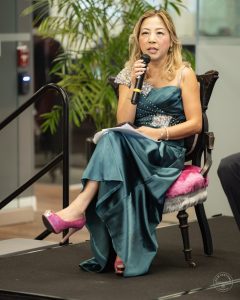
加拿大多伦多讯——2026年9月14日,在多伦多国际电影节周期间举行的 Film Festival Connect Toronto 2026 · AI & Film Forum 上,加拿大华裔作家、制片人及AI动画创作者 Sisi Tesser 受邀参加第二场主题讨论 “Future Film: From Prompt to Production”,与电影、剧本开发、人工智能及创意产业领域的专业人士共同探讨:当AI越来越深入电影制作流程,人类创作者如何继续掌握故事、审美、版权与最终判断权。
AI & Film Forum于9月14日在多伦多市中心 111 Eleven, 325 Front St. W. 举行,由 Film Festival Connect 与 Startup Fuel 呈现。当天论坛设有三场讨论,其中Panel 2于12:50至1:20举行,主题聚焦AI如何进入从创意、剧本到实际制作和银幕呈现的全过程。主持人为 Katisha Shaw,嘉宾包括 Gordon Weiske、Sisi Tesser 和 Jay Gogna。
从“Prompt”到银幕:AI能做什么,人必须保留什么
Panel 2围绕一个现实问题展开:
AI究竟可以怎样帮助电影人把一个想法更快、更有效地变成影像,同时又不让创作者失去原创性、作者身份与判断权?
讨论从剧本开发进入视觉制作,再延伸至音乐、知识产权、创意资产与商业价值。
作为《The Lavender Girl / 薰衣草女孩》的原创作者和制片人,Sisi Tesser分享了她从英文科幻小说出发,将故事发展成为AI辅助动画系列的实践经验。
她谈到,AI确实可以让独立创作者完成过去在预算、技术和制作规模上难以实现的画面,但技术并不会自动带来一个好故事。
在她看来:
“AI可以帮助我们实现画面,但故事、人物、情感和最后的判断,仍然必须掌握在创作者手里。”
这也成为当天Panel 2讨论的核心之一。
AI电影并不等于“低成本电影”
Sisi在现场还特别谈到一个容易被外界忽略的问题——AI影视制作并不意味着没有成本。
她分享自己在《The Lavender Girl》制作早期了解到的市场情况:半年前,高质量AI漫剧制作的市场报价已经可以达到约人民币2万元一分钟。当项目进入几十分钟规模后,人物一致性、镜头设计、动画生成、画面修正、声音、音乐和后期制作都会迅速累积成本。
因此,AI真正带来的价值,并不是“免费做电影”,而是让过去因为预算和技术门槛无法实现的创意,获得新的实现方式。
她也强调,AI越强大,创作者越需要清楚知道:
什么可以交给工具,什么必须由人决定。
英语是第四语言,为什么仍选择用英文创作?
论坛当天,主办方还临时为Sisi安排了一个展示台。
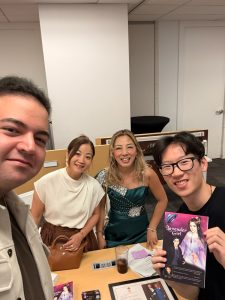
她在现场展示了自己的三本英文小说、《The Lavender Girl》项目资料、个人及公司名片、官方网站,以及《The Lavender Girl》全球首映相关材料。
不少现场电影人和创作者来到展位交流。
其中,一个被反复问到的问题是:
“英文是你的第四种语言,你是怎么写英文小说的?”
Sisi表示,语言首先是故事抵达读者的桥梁,而不是限制创作者的墙。
当有观众问她:
“如果英语不是母语,小说应该用什么语言写?”
她的回答是:
“先用你最能够表达情感和文化的语言写。如果你是西班牙人,也完全可以先出版西班牙语版本。重要的是先把故事写出来。”
这段交流也让当天关于AI、语言与创作者身份的讨论,从技术层面回到了更加个人的创作经验。
《The Lavender Girl》成为现实案例
Sisi在论坛上的分享并非停留在理论。
《The Lavender Girl》由她自己的同名英文科幻小说改编,第一季已经发展成为10集AI辅助动画系列,并进一步制作了面向电影节、首映和专业展示的横版Festival Version。
她以这个项目说明:从小说到剧本,再到角色、世界观、视觉设计和动画制作,每一次“adaptation”本质上都是一次翻译——从文字翻译成画面,从想象翻译成可以被观众看到的世界。
她说:
“技术可以加快这个过程,但它不能代替创作者知道自己为什么要讲这个故事。”
《The Lavender Girl》目前也已进入TikTok Drama相关发行阶段。根据项目后台数据,上线后不到约一周半,播放量已突破10.3万次,为这一加拿大原创IP进入国际数字发行市场带来了新的反馈。
主办方:人类创作仍是AI时代电影讨论的核心
Film Festival Connect对Panel 2的定位同样强调“AI作为协作者,而不是创作者的替代品”。
官方活动介绍指出,本场讨论关注AI如何帮助电影人改善故事开发、生产规划和实际制作,同时继续由电影人掌握作者身份、原创性和判断。
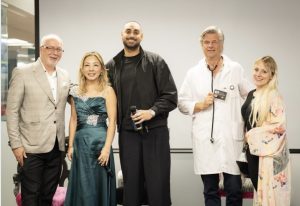
会后,主办方向Panel 2四位参与者提供了包含36张照片的专属影像资料,记录现场讨论、观众互动及嘉宾合影。
论坛主办方Richard J. Railey随后也向所有主持人与嘉宾发出感谢,表示正是参与者提供的时间、经验与观点,使这场关于AI与电影未来的讨论成为可能。
从论坛继续走向电影与资本交流
AI & Film Forum结束后,Sisi继续参加当天下午4时至6时在King Taps举行的 Film and Finance Event。
这场活动连接电影人、制片人、金融及投资领域人士,当天已经售罄。
9月15日晚,她又参加了在Toronto King Street举行的 Women in Film – Unofficial Afterparty。该活动同样属于Film Festival Connect电影节周系列社交活动,汇集电影行业人士继续交流与建立新的合作关系。
对于原本以为今年已经赶不上多伦多电影节周活动的Sisi来说,连续参与论坛、行业交流和电影社群活动,成为《The Lavender Girl》全球首映之后的另一个重要节点。
从全球首映到下一部90分钟电影
在《The Lavender Girl》首映成功举办之后,Toronto Sisi Productions Inc. 随后举行了一次小型Open House。
部分未来电影项目的意向演员、电影人、艺术家和长期支持者参加了交流。
出席者包括与下一部90分钟院线电影开发有关的部分演员及创意人士,以及导演王劲林、Global Short Film Awards相关评审 Christina Z. Chang、乌克兰裔加拿大作曲家与钢琴家 Nadya Poklad 等嘉宾。
摄影师Tina也为当天活动留下了一组现场影像。
Toronto Sisi Productions目前正在继续推进新的真人电影项目开发。
对于Sisi而言,从小说出版、AI动画、全球首映,到电影节周的行业讨论和下一部真人电影的开发,这些项目虽然形式不同,却都围绕同一个核心:
故事从哪里开始并不重要。
重要的是,创作者是否仍然知道这个故事为什么值得被讲述。
在AI迅速改变电影工业的今天,她认为真正值得讨论的,并不是“AI会不会取代电影人”,而是:
电影人是否能够学会使用新工具,同时仍然保留自己的声音、责任、审美和作者身份。
而这,也正是她在 Future Film: From Prompt to Production 这场讨论中,希望带给观众的答案。



From Novel to AI Animation: Sisi Tesser Joins Toronto’s AI & Film Forum During Festival Week
Creator of The Lavender Girl shares a real-world perspective on authorship, AI-assisted filmmaking and the future of independent production
TORONTO — September 2026 — Canadian novelist, producer and filmmaker Sisi Tesser joined filmmakers, performers, technologists and creative-industry professionals at the AI & Film Forum in Toronto on September 14, 2026, taking part in Panel Two, “Future Film: From Prompt to Production.”
Presented during Toronto’s busy international film festival week, the forum brought together three panels examining how artificial intelligence is changing filmmaking — from performance and ethics to story development, production, music, intellectual property and creative responsibility.
Tesser joined Gordon Weiske and Jay Gogna for Panel Two, moderated by Katisha Shaw.
The central question was both practical and increasingly urgent:
How can filmmakers use AI to expand what they can create without surrendering authorship, originality or judgment?
From Story to Screen
Panel Two followed the life of a creative idea — beginning with story development, moving through production, and continuing into music, rights, ownership and the value of creative assets.
Tesser brought a particularly practical perspective to the conversation.
As the original creator of the science-fiction property The Lavender Girl, she has taken her own story from an English-language novel into a ten-episode AI-assisted animated series and a separate cinematic Festival Version.
Her experience allowed the discussion to move beyond theory and into the realities of actually producing a narrative project with emerging technology.
“AI can help us realize images that may once have been financially or technically out of reach,” Tesser said. “But the story, the characters, the emotional meaning and the final creative judgment still have to belong to the creator.”
For Tesser, that distinction is fundamental.
Technology may accelerate parts of production, but it cannot decide why a story deserves to exist.
AI Filmmaking Is Not Necessarily Cheap Filmmaking
Tesser also challenged one of the common assumptions surrounding generative filmmaking: that AI automatically makes production inexpensive.
Drawing on her own production experience with The Lavender Girl, she told attendees that when she began the project roughly six months earlier, premium AI animation services she encountered in the market could cost approximately RMB 20,000 per finished minute.
At scale, the economics change quickly.
Character consistency, visual development, shot generation, revision, editing, music, sound and post-production can still require significant investment and extensive human direction.
Her message was simple: AI can change what an independent creator is capable of producing, but serious AI-assisted filmmaking still requires time, money, taste and creative supervision.
When English Is Your Fourth Language
The day also produced an unexpected opportunity.
Organizers provided Tesser with a booth where she displayed her three English-language novels, information about The Lavender Girl, approximately 200 business cards, her official website and materials connected to the project’s world premiere.
Among the materials on display was a congratulatory message received in connection with the premiere from King Charles III and Queen Camilla.
The booth became a conversation point throughout the forum.
Several visitors were particularly surprised to learn that English is Tesser’s fourth language.
One question came up repeatedly:
How did you write novels in English when English was not your first language?
Another visitor asked what language a writer should choose if English is not their native tongue.
Tesser’s advice was straightforward:
“Write first in the language in which you can most honestly express the story. If you are Spanish, there is nothing wrong with publishing the Spanish version first. The important thing is to tell the story.”
For Tesser, language should be a bridge to an audience, not a reason to stop creating.
The Lavender Girl as a Real-World AI Production Case Study
The Lavender Girl began as Tesser’s original science-fiction novel and later evolved into an AI-assisted animated project.
Season One consists of ten episodes, followed by a separate horizontal Festival Version developed for screenings, professional presentation and festival-oriented use.
The project also became a useful case study for the panel’s larger discussion about adaptation.
Moving from novel to screen has always required translation: an idea becomes language, language becomes scenes, and scenes become performances, images, sound and rhythm.
AI introduces another layer to that translation.
The key question, Tesser argued, is not whether technology participates in that process, but who remains responsible for the final creative decisions.
“Technology can accelerate the journey,” she said, “but it cannot replace knowing why you are telling the story.”
Early Audience Response
Following the project’s recent distribution activity, Tesser said The Lavender Girl reached approximately 103,000 views within less than a week and a half on TikTok-related distribution.
For an independently developed Canadian original property moving from novel to AI animation, the early response has been encouraging.
It also gave Tesser an additional real-world perspective to bring into the forum: AI tools may help create content, but audiences ultimately determine whether a story connects.
A Forum Focused on Human Responsibility
The AI & Film Forum was structured around three conversations.
Panel One, “AI and the Human Future of Film,” examined performance, identity, ethics and trust in the age of synthetic media.
Panel Two, “Future Film: From Prompt to Production,” focused on how AI fits into story development and production while human filmmakers retain authorship and judgment.
Panel Three brought the conversation into the working environment of a film set, examining automation, safety and human accountability.
Across the program, one question returned repeatedly:
What should filmmakers never surrender completely to an AI system?
For Panel Two, the answer was less about rejecting technology than about defining responsibility.
AI may function as a collaborator, diagnostic tool or accelerator.
But taste, meaning, ethics and authorship still require a human being willing to stand behind the work.
Following the event, the organizers created a private 36-image Panel Two gallery featuring the discussion, audience moments and portraits of Katisha Shaw, Gordon Weiske, Sisi Tesser and Jay Gogna.
Forum organizer Richard J. Railey later thanked the moderators and panellists for contributing their time, experience and ideas during an exceptionally busy festival week.
From AI & Film to Film & Finance
The conversation continued beyond the forum.
Later that afternoon, Tesser attended the Film & Finance Mixer at King Taps in downtown Toronto, a sold-out industry gathering connecting professionals across filmmaking, finance and creative entrepreneurship.
The following evening, September 15, she joined members of Toronto’s film community at an industry afterparty at Silent H on King Street West, continuing conversations and new connections formed during the week.
For Tesser, the timing was unexpected.
She had initially assumed that her schedule following The Lavender Girl world premiere would leave little opportunity to participate in Toronto’s 2026 festival-week activities.
Instead, she found herself taking part in multiple industry events only weeks after the premiere.
The Next Chapter for Toronto Sisi Productions
Following the successful world premiere of The Lavender Girl, Toronto Sisi Productions Inc. also hosted an Open House bringing together filmmakers, performers, musicians and supporters connected to the company’s next stage of development.
Guests included people exploring involvement in the company’s planned 90-minute live-action feature film, along with filmmakers and creative professionals such as director Wang Jinlin, Global Short Film Awards jury member Christina Z. Chang, and Ukrainian-born Canadian composer and pianist Nadya Poklad.
Photographer Tina documented the gathering and created a new collection of images capturing the conversations and connections around the studio’s future work.
Toronto Sisi Productions is now continuing development of its next live-action feature while expanding The Lavender Girl as an original screen property.
For Tesser, the projects may take different forms — novels, animation, music or live-action film — but the creative principle remains the same.
“Technology can help a story become visible. But the creator must still decide what story is worth telling.”
That idea also captures the larger question at the heart of Future Film: From Prompt to Production.
The future of filmmaking may include increasingly powerful AI tools.
The challenge will be ensuring that human voice, responsibility, judgment and imagination remain at the centre of what those tools are used to create.